
India
Sri Lanka
Nepal
Maldives
Bhutan

Jaipur is exhilarating, but it can also be exhausting. Savista Retreat offers an antidote: a serene, family-owned estate surrounded by farmland on the rural edge of the city. The Pink City’s palaces, museums and bazaars remain within reach, but days here begin with birdsong rather than traffic.
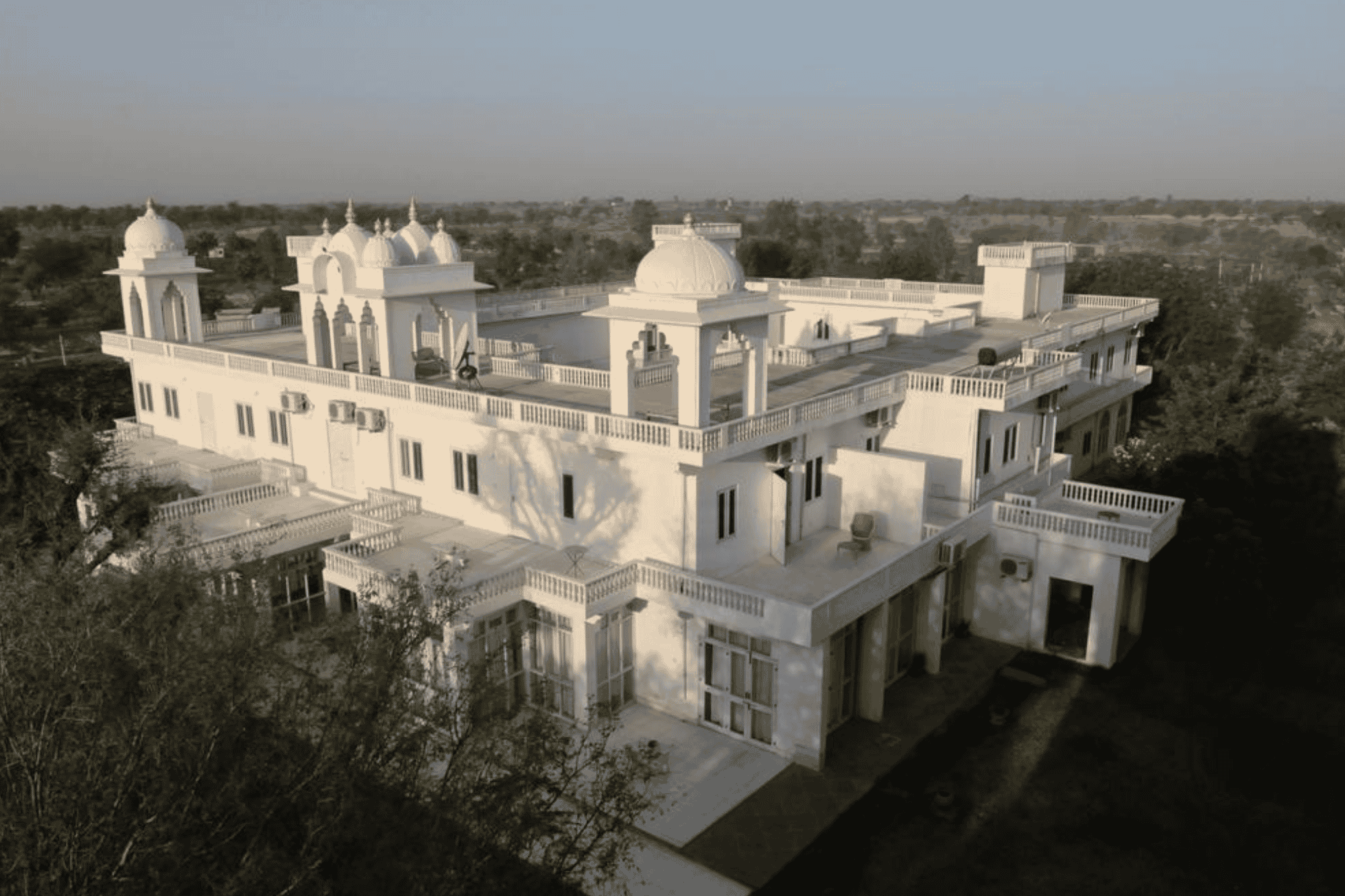
Set across 12 acres in the village of Sanjharia, Savista centres on a handsome, whitewashed haveli surrounded by gardens, fields and mature trees. Its scale feels generous but intimate, with just 14 individually decorated rooms, a courtyard swimming pool and numerous terraces, lounges and garden corners in which to disappear.
Savista is the ancestral property of its owner, Bhanwar Rishyasringa, who runs the retreat with his wife, Radhika. After careers in academia and international development, the couple returned to Rajasthan and gradually transformed the estate into an experiment in sustainable hospitality. Their presence gives Savista much of its character. Think of this as an unusually beautiful home opened to curious travellers.
14 individually decorated rooms
A restorative rural setting, deeply personal hospitality, exceptional vegetarian food and meaningful access to Jaipur’s craft traditions.
Organic farming, farm-to-table food, rainwater harvesting, solar water heating, chemical-free pool management, reduced bottled water and local employment.

Approximately ₹12,500 per night; recent standard-room rates have been around AUD $230–$250. Rates vary by season, room and inclusions, so check directly before booking.
Jaipur International Airport, approximately 29 kilometres or 40–45 minutes by car.
No two guest rooms are quite alike. Each takes its cues from Rajasthan’s landscape, plants and decorative traditions, with names such as Gulmohur, Mayura, Kesar, Terracotta and Lapis Lazuli. Expect hand-painted furniture, block-printed textiles, woven rugs and expressive combinations of saffron, indigo, rose and earthy green.
The aesthetic is traditional without feeling overly formal. Four-poster and carved timber beds appear alongside cane chairs, antique-style cupboards and locally made fabrics. Many rooms open to a private terrace or balcony overlooking the gardens, pool or surrounding countryside.
Rooms are comfortably equipped with ensuite bathrooms, ceiling fans and air conditioning, although the experience remains intentionally simple. There may not be a television in every room, nor the anonymous uniformity of a conventional hotel. Instead, there is space, individuality and the sense that each room has been assembled over time.
The large estate also provides plenty of places beyond the bedroom to settle with a book. Guests can move between shaded verandahs, sun terraces, lawns, a library and quiet garden nooks throughout the day.

Food is central to life at Savista. Meals are vegetarian, seasonal and predominantly plant-based, drawing on Rajasthan’s traditional understanding of food as something that should nourish rather than merely impress.
The estate grows most of its vegetables and all of its grains, pulses and oilseeds without synthetic chemical fertilisers or pesticides. Milk and yoghurt come from animals fed on grass grown at the property, while mineral-rich drinking water is drawn from Savista’s deep bore wells, reducing reliance on bottled water.
Rather than ordering from an extensive restaurant menu, guests are generally served changing home-style meals based on what is growing and seasonally available. The cooking draws from both North and South Indian traditions and frequently incorporates family recipes. Breakfast might be served outside beneath the trees, while dinner could unfold beside the pool or in a former stable warmed by a fire during Rajasthan’s cool winter evenings.
Dietary requirements, including vegan meals, can be accommodated with advance notice. The restrained, farm-led approach may be particularly refreshing after several days of richer restaurant food.
Savista is positioned around 40 minutes from central Jaipur, depending on traffic. It works well for travellers who want to devote full days to the city and return somewhere peaceful, rather than moving repeatedly between their hotel and the sights. The retreat can arrange a trusted car and driver for Jaipur, airport transfers and longer journeys around Rajasthan.
There is also a strong argument for leaving entire days unplanned. Guests can swim in the courtyard pool, play tennis, pickleball, badminton or croquet, use the gym, book a massage or sauna session, browse the library, practise yoga, watch birds or walk through the neighbouring countryside.
Savista’s cultural experiences are more thoughtful than the abbreviated demonstrations sometimes staged for tourists. Depending on availability, guests can learn hand block printing with hereditary artisans, visit a village potter, take an Indian cooking class or tour a handmade-paper workshop. Village walks and camel-cart journeys introduce the rural landscape surrounding the estate, while trips can be arranged to the textile town of Bagru, Pushkar, Chand Baori stepwell, Sambhar Salt Lake and Keoladeo National Park.
The proximity to Bagru is a particular advantage for travellers interested in textiles. Its workshops preserve the region’s traditions of hand-carved wooden blocks, natural dyes, mud-resist printing and indigo.
Children are welcome, and Savista’s spacious grounds make it a gentle option for families needing room to decompress. The swimming pool, lawns, games, cycling and craft activities offer more freedom than a small urban hotel, while visits to potters and printers can make Rajasthan’s creative traditions tangible for older children.
It is not, however, a conventional family resort. There is no kids’ club, waterslide or constant programme of entertainment. Savista will work best for families who enjoy nature, making things and travelling at a slower pace.
Savista’s environmental work is embedded in the operation of the estate. Measures include rainwater harvesting and groundwater recharge, solar-heated water, organic cultivation and a freshwater pool that avoids conventional chemical treatment. Pool water is ultimately reused for irrigation.
The retreat also sources much of its food directly from the land and employs staff from the surrounding community. Produce is shared locally, cultural activities involve practising artisans, and a no-tipping policy aims to create a more equitable relationship between guests and staff. The result is a working farm and home in which hospitality, agriculture and village life remain connected.


