India
Sri Lanka
Nepal
Maldives
Bhutan

Bhutan sits high in the eastern Himalayas, a small kingdom of forested valleys, snow-dusted peaks and extraordinary monasteries. Prayer flags stretch across mountain passes, traditional farmhouses cling to hillsides and enormous dzongs rise from riverbanks, part fortress, part monastery, part living centre of community life.
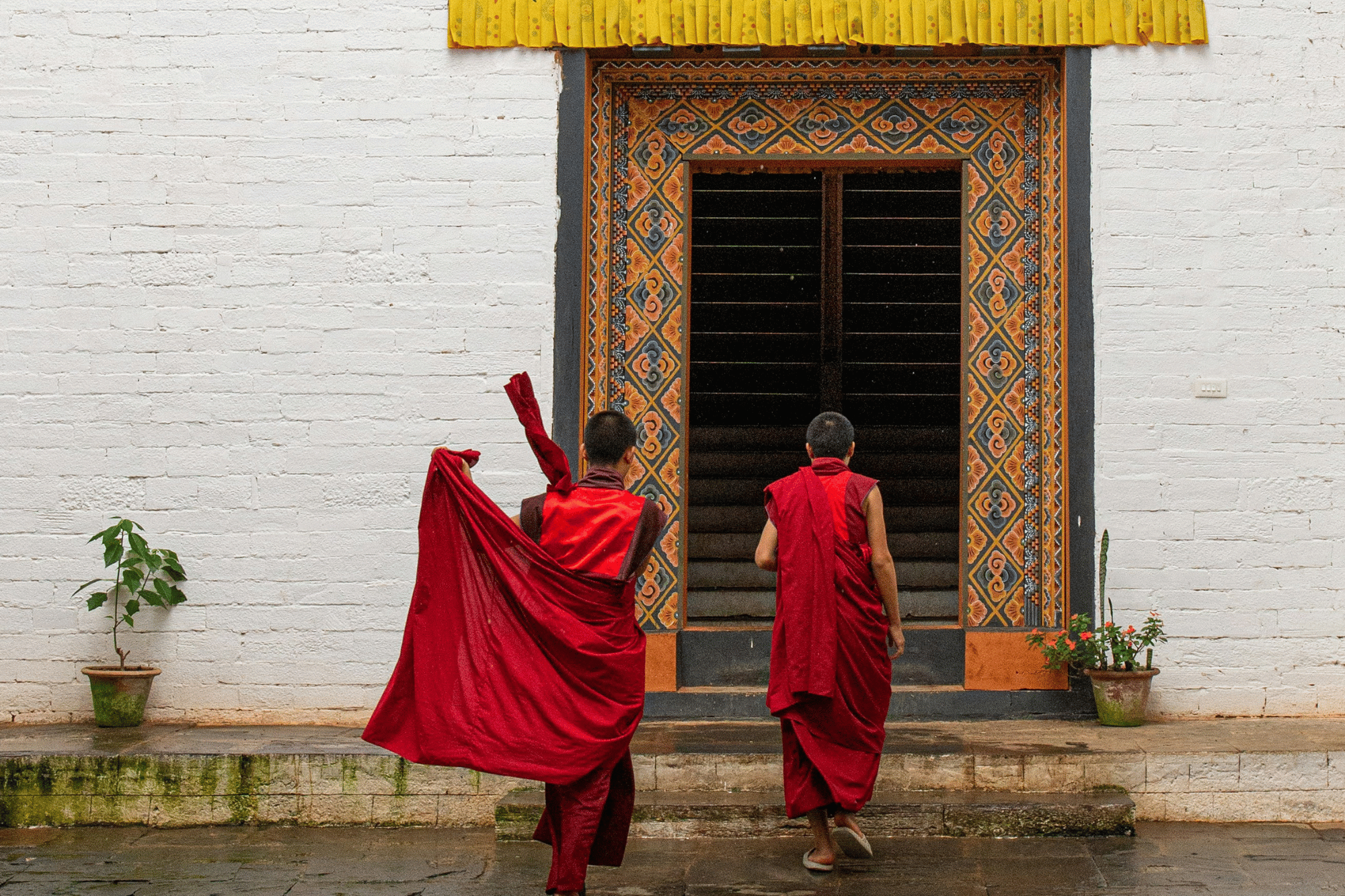
Buddhism is woven deeply into the landscape. Monks cross monastery courtyards in crimson robes, prayer wheels turn beside footpaths and sacred sites appear in caves, forests and on seemingly impossible cliff faces. The most famous, Paro Taktsang, or Tiger's Nest, clings to rock high above the Paro Valley, reached by a winding trail through pine forest.
Bhutan has deliberately taken a different path from many of its neighbours, limiting tourism and placing unusual emphasis on cultural preservation and the natural environment. The result isn't a country frozen in time, but one negotiating modern life on its own terms. Come for the mountains and monasteries, but pay attention to the painted houses, textiles, archery fields, village kitchens and quiet details in between.
A Himalayan kingdom of prayer flags, painted houses and monasteries in the clouds.

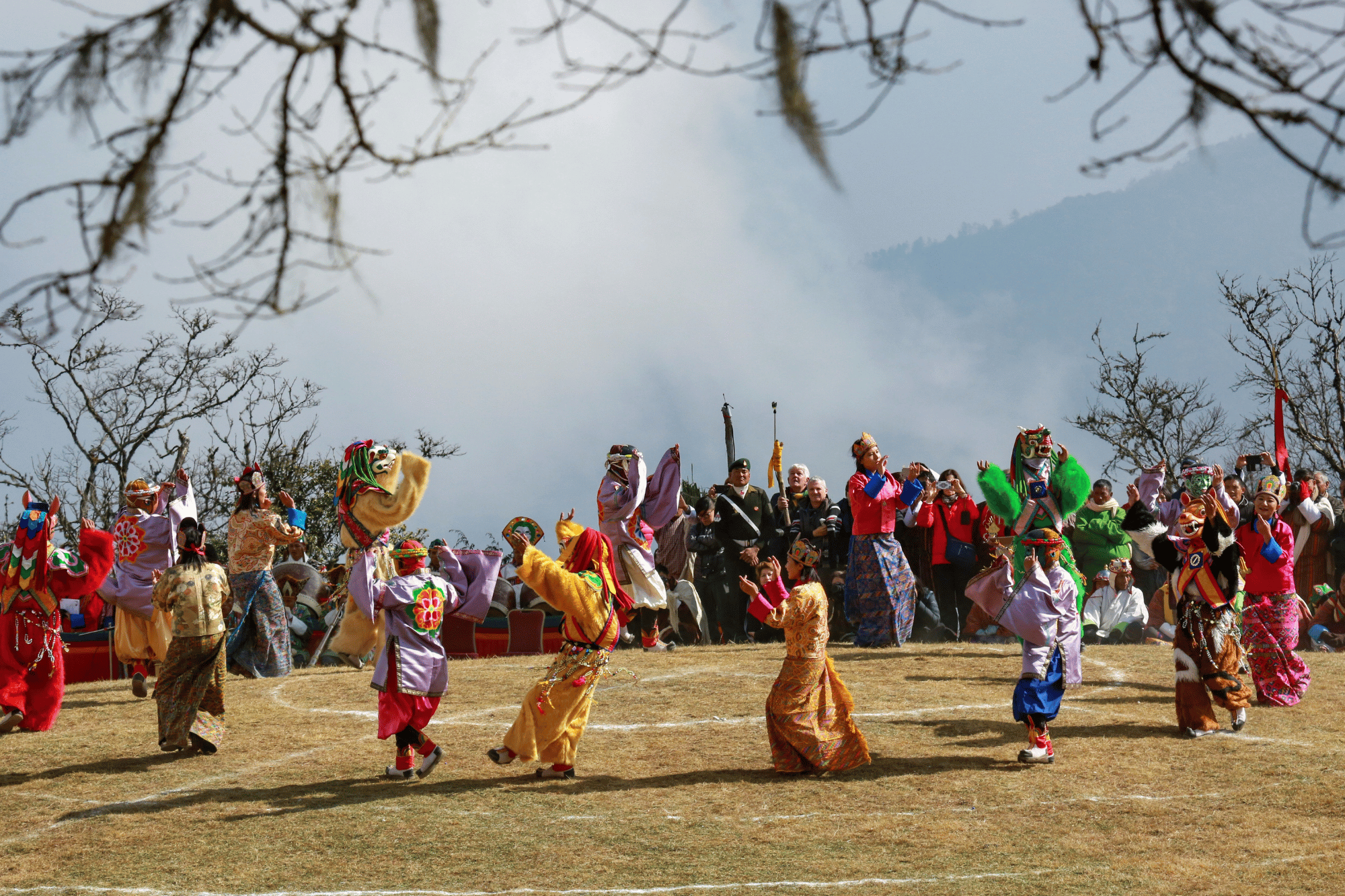
Bhutan is made for slow travel. Most journeys follow the valleys of the west, beginning in Paro before winding towards the capital, Thimphu, and across mountain passes to Punakha. Go further east and the roads grow longer, the visitor numbers thinner and the landscapes increasingly remote. Wherever you travel, getting there is part of the experience.
For families, Bhutan offers a gentler kind of adventure. There are forest walks, suspension bridges, riverside picnics, farm stays, archery, monastery visits and plenty of animals wandering through village life. Older children can tackle the climb to Tiger's Nest, while shorter trails and valley walks make the mountains accessible without committing to a serious trek.
Travel here is more structured than elsewhere in South Asia, and the country's tourism levy makes Bhutan a relatively expensive destination. In return, there is space: forest covers much of the country, historic architecture remains part of everyday life and even the capital feels remarkably small. Don't rush from sight to sight. Bhutan's simple moments are often the ones that stay with you.
We’re looking for curious minds who crave discovery, value culture, and thrive on uncovering South Asia’s hidden stories. Join us to explore, create, and share experiences that inspire our readers to see cities differently.